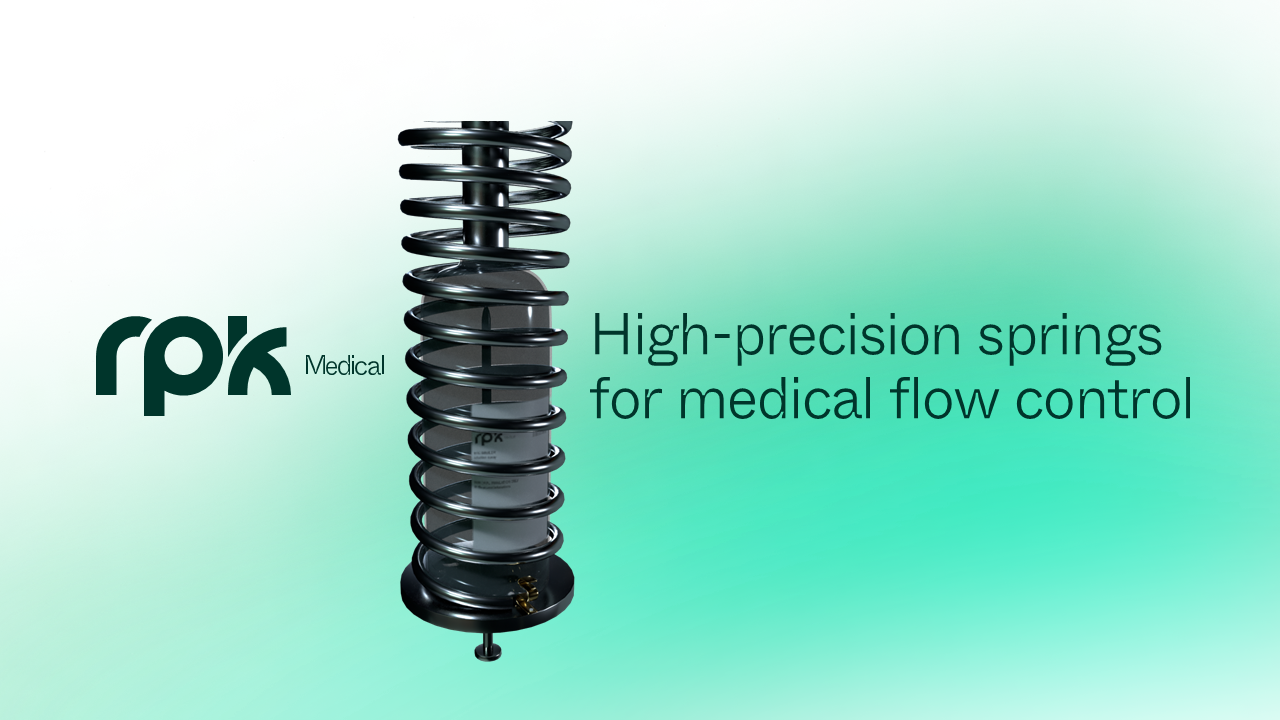
High-precision springs for medical flow control
In healthcare, springs act as vital engines of stored mechanical energy
11/06/2026
High-precision springs for injection and flow control in medical devices are invisible heroes hidden inside inhalers and autoinjectors. Unlike many general-purpose industrial springs, in this field, tolerances and flow control directly affect patient safety. Their only mission is to release medication with exactly the same force on the first dose as on the thousandth.
According to industry data, an error margin thinner than a human hair can dramatically alter the effect of a medication. In practice, the tight precision tolerances of these technical springs ensure dimensional accuracy, helping prevent accidental overdoses. This absolute reliability is what separates a simple hardware component from a life-saving device.
High-precision springs are essential in medical injection and flow-control devices. These systems require extremely tight tolerances to ensure accurate dosing and patient safety.
Their performance combines microfluidics with key infusion-pump functions, including constant pressure, sealing, and alarms, using biocompatible materials such as passivated stainless steel and shape-memory Nitinol.
Manufacturing adheres to ISO 13485 and strict quality controls, including machine vision inspection, load testing, and material certification, to ensure reliability. In autoinjectors and inhalers, compression and torsion springs enable precise, easy-to-use drug delivery, thereby improving clinical outcomes.
The “Finger on the Hose”: how springs control the flow of life
Although a spring may push fluids, its real magic lies in controlling speed. Imagine trying to release exactly three drops of water from a high-pressure hose; you would need a perfect finger on the trigger.
In medicine, this critical precision is achieved through solutions that maintain constant flow in microfluidics, a technology used to safely handle extremely small, nearly invisible amounts of fluid, combined with advanced flow-control strategies.
The heart of an infusion pump depends entirely on the metal's constant elasticity. Inside this everyday medical device, a small spring performs three vital patient-safety functions:
- Maintaining constant pressure to deliver medication precisely, drop by drop.
- Sealing valves tightly when the device stops, helping prevent accidental overdoses.
- Triggering immediate safety alarms if a blocked tube is detected.
Achieving this level of peace of mind requires tireless effort. Stainless steel springs for flow-control valves help ensure the mechanism’s force remains consistent and does not corrode over thousands of uses. However, a critical challenge arises when these microscopic parts must coexist inside the patient’s body.
Stainless steel vs. nitinol: choosing the material your body will accept
When a medical component has to remain inside the body, the rules change. The major challenge is achieving “biocompatibility”: making sure the body does not reject the material as a foreign intruder. For implants to function for years without causing harm, medicine relies on springs with high corrosion resistance and biocompatibility.
Protecting these metals from internal body fluids requires an invisible shield. While ordinary iron rusts when exposed to air, medical metals undergo a chemical treatment called passivation, which creates a microscopic protective barrier.
This passivation process for springs used in healthcare environments turns stainless steel into a safe material, ideal for devices that remain in temporary contact with the patient.
Modern surgeries, however, require even more flexible materials that can navigate narrow blood vessels. When comparing Nitinol with stainless steel in surgical applications, Nitinol stands out in minimally invasive procedures. This special alloy has “memory”: it can be compressed inside a millimeter-scale tube and then recover its exact original shape once it reaches the heart.
Choosing the right material ensures the body silently accepts it throughout its service life. Shaping these parts requires absolute accuracy and microscopic manufacturing rigor, in accordance with ISO 13485.
Thinner than a hair: manufacturing rigor under ISO 13485
Manufacturing tiny components is a monumental challenge when a fraction of a millimeter can directly affect a patient’s health. In the production of micro springs for medical devices, patient safety is non-negotiable. The industry follows ISO 13485 quality standards for medical springs, a strict international benchmark certifying that the mechanism will not fail during an emergency.
Achieving this perfection requires technology capable of seeing what the human eye cannot. Dimensional precision in ultra-small-diameter springs is ensured through the following quality-control steps:
- Machine-vision inspection: smart cameras detect defects thinner than a human hair.
- Automated load testing: these tests simulate thousands of uses to prevent material fatigue and ensure the spring does not lose force over time.
- Material certification: this documents the purity of the metal used.
Knowing that the core of these devices has passed such demanding tests provides invaluable peace of mind. This hidden technical excellence turns basic components into true medical guardians.
Autoinjectors and inhalers: life-saving technology in your pocket
A medical emergency makes us appreciate immediacy. In critical moments, the design of next-generation autoinjector components takes over to reduce human error. When the button is pressed, the elastic force stored inside is released instantly, performing the physical work so the patient does not need a perfectly steady hand.
Behind this apparent simplicity is a strict spring-design approach for drug-delivery systems that distributes different mechanical functions.
These portable devices rely on the distinction between compression springs and torsion springs in injectors:
- Compression springs: these compress like an accordion and, when released suddenly, push the vital liquid into the body.
- Torsion springs: these work through small rotational movements and are responsible for the precise “clicks” in dials that select the exact dose.
Knowing that both components work together ensures that even someone with trembling hands can administer medication with ease.
The peace of mind of precision: why small components deliver big results
The success of many medical treatments depends on components that are invisible to the naked eye. High-precision springs for the medical sector ensure accurate dosing. By meeting strict sterilization requirements for surgical elastic components, these parts help ensure that medical innovation truly protects health from the inside. Compared with conventional industrial springs, high-precision medical springs are specifically designed for injection and flow control in critical environments.
Understanding the engineering behind a medical device highlights the immense value of these components. This tiny technology is the silent engine that enables treatments to be administered safely and effectively, directly improving patients’ quality of life.
Frequently Asked Questions
Why are high-precision springs needed in medical devices?
Because patient safety depends on accurate, repeatable dosing. In injection and flow-control applications, tolerances thinner than a human hair can change the effect of a medication. These springs maintain the same force from the first dose to the thousandth, helping prevent overdoses and dosing errors. Unlike standard hardware components, these components are specifically designed and manufactured for critical environments where dimensional control and continuous flow are essential.
How do autoinjectors and inhalers achieve precise, user-friendly administration?
When the button is pressed, the springs perform the physical work, minimizing human error. Compression springs are compressed and then release energy to drive the liquid with the exact required force, while torsion springs control the turns and “clicks” of the dose-selection dial. This combination delivers consistent doses even for users with trembling hands and directly supports better clinical outcomes.
What does ISO 13485 ensure in the manufacturing of medical micro springs?
It ensures a quality system focused on patient safety and device reliability. Under ISO 13485, micro springs are controlled through machine-vision inspection to detect extremely small defects, automated load tests that simulate thousands of uses to prevent fatigue, and material certification that verifies purity. This discipline achieves dimensional precision in ultra-small diameters and reduces the risk of failure in critical situations.
Which material should be chosen: passivated stainless steel or Nitinol?
It depends on the required biocompatibility and function. Passivated stainless steel creates a microscopic barrier that makes it safe for medical contact, making it ideal for components with temporary exposure and high corrosion-resistance requirements. Nitinol, with its shape-memory properties, excels in minimally invasive surgery: it withstands extreme deformation and returns to its original geometry within the body. The choice depends on implantation time, flexibility requirements, and the physiological environment's demands.
How do springs control flow rate in infusion pumps and microfluidic systems?
They work like a “perfect finger on the hose.” The stable elasticity of metal maintains constant pressure to deliver medication drop by drop. Springs also seal valves tightly when the device stops and trigger alarms if a blockage is detected. In this role, stainless steel springs for flow-control valves resist corrosion and retain their force over thousands of cycles, ensuring safe, predictable flow at the microfluidic scale.
Let’s talk and turn concerns into certainties. Tell us!
Get in touch with our engineering and sales teams, we’ll listen to you carefully and find the best solution together.
Contact us now